


Let’s settle this once and for all.
You’re paying for a phone plan… but are you actually getting the coverage you’re paying for? We’re talking about the kind that doesn’t drop your call when you walk into the kitchen or make your TikTok buffer for way too long.
Whether you're team Verizon, AT&T, or T-Mobile—or you're just trying to figure out who to trust—we’ve dug into the data to answer the question everyone’s asking:
Which phone carrier really has the best coverage?
Let’s break it down.
Who Has the Best Cell Phone Coverage in 2026?
The answer isn't as simple as picking one winner. Verizon, AT&T, and T-Mobile each have their strengths, but the best cell phone carrier for you depends on where you live, work, and travel.
We've compared the major networks using independent nationwide testing and detailed coverage maps on Goji to see which carriers stand out for overall coverage, 5G, rural service, and nationwide connectivity.
Best 5G Coverage: T-Mobile
If 5G is your priority, T-Mobile continues to stand out.
According to Opensignal's July 2026 U.S. Mobile Network Experience report, T-Mobile leads in key 5G categories. It earned the top score for 5G Coverage Experience (8.5 out of 10), led in 5G Availability (91.8%), and delivered the fastest average 5G download speeds at 247.4 Mbps.
That's a pretty impressive combination of coverage and speed.
A big reason is T-Mobile's extensive use of mid-band spectrum, particularly 2.5 GHz. In simple terms, this technology helps deliver faster 5G speeds without sacrificing as much coverage as higher-frequency 5G.
T-Mobile is especially worth considering if you:
- Live in an area with strong T-Mobile 5G coverage
- Stream, game, or download frequently
- Care about faster mobile data
- Want to spend more time connected to 5G
But here's the catch: winning on 5G doesn't automatically mean T-Mobile has the best coverage everywhere.
Your experience can still vary depending on your neighborhood, building, terrain, and local network conditions.
Want to see how the networks stack up? Check out our 5G coverage comparison for a closer look at T-Mobile, Verizon, and AT&T.
Best Rural Coverage: Verizon
Verizon gets our pick for rural cell phone coverage, but AT&T is right on its heels.
According to Opensignal's July 2026 U.S. Mobile Network Experience report, Verizon leads the major carriers in overall Coverage Experience, earning a score of 9.7 out of 10. That makes it a strong option for people who need service beyond major cities, although AT&T remains a close competitor.
That makes Verizon worth considering if you:
- Live in a rural area
- Regularly drive through less-populated areas
- Take frequent road trips
- Care more about reliable connectivity than having the fastest 5G speeds
But rural coverage can be tricky. Mountains, terrain, and distance from cell towers can all affect your signal. That's why checking coverage at your specific address matters more than relying on national rankings alone.
Most Consistent Nationwide Coverage: AT&T
AT&T is a strong choice for nationwide connectivity, especially if you want a network that keeps you connected as you move between cities, suburbs, and rural areas.
According to Opensignal's July 2026 U.S. Mobile Network Experience report, AT&T ranked first for Time on Network, with users connected to a mobile network 99.6% of the time. Verizon followed closely at 99.5%, with T-Mobile at 99.2%.
AT&T also performed well in RootMetrics' first-half 2026 nationwide testing, tying with Verizon for overall network performance and reliability.
And its coverage footprint is extensive. According to AT&T's 2025 Annual Report, its LTE network covered more than 337 million people in the U.S. at the end of 2025, while its 5G network reached more than 322 million.
That makes AT&T worth considering if you:
- Want dependable connectivity across different parts of the country
- Regularly travel between urban, suburban, and rural areas
- Spend a lot of time on the road
- Prefer broad coverage over having the fastest possible 5G speeds
Of course, nationwide statistics don't guarantee a perfect signal everywhere. AT&T may perform better than its competitors in some locations and worse in others, so checking local coverage is still essential.
Why the Best Cell Phone Carrier Depends on Your Location
You wouldn't buy snow boots for a beach trip, right? Same logic applies to phone plans.
The best carrier for your friend in NYC might be terrible for you in Phoenix. Or LA. Or even your specific apartment building.
That's because cell phone coverage can vary dramatically depending on your location. Buildings, terrain, distance from cell towers, and network congestion can all affect your experience.
So, before choosing a carrier based on national rankings, take a minute to check coverage at your address.
With Goji's free Coverage Map, you can:
- Compare Verizon, AT&T, and T-Mobile coverage in your area
- Explore 4G LTE and 5G network coverage
- See how coverage changes across different locations
And yes, we recommend checking the big three, along with popular MVNOs like US Mobile, which offers access to all three major networks. You might discover that a carrier you've never considered actually has better coverage where you live.
Here's a look at each carrier's 5G coverage on Goji's Coverage Map. Want to explore 4G LTE coverage, too? You can switch between both network types on Goji.
AT&T Coverage Map
AT&T has an extensive nationwide network, but its coverage can still vary from one neighborhood to the next.
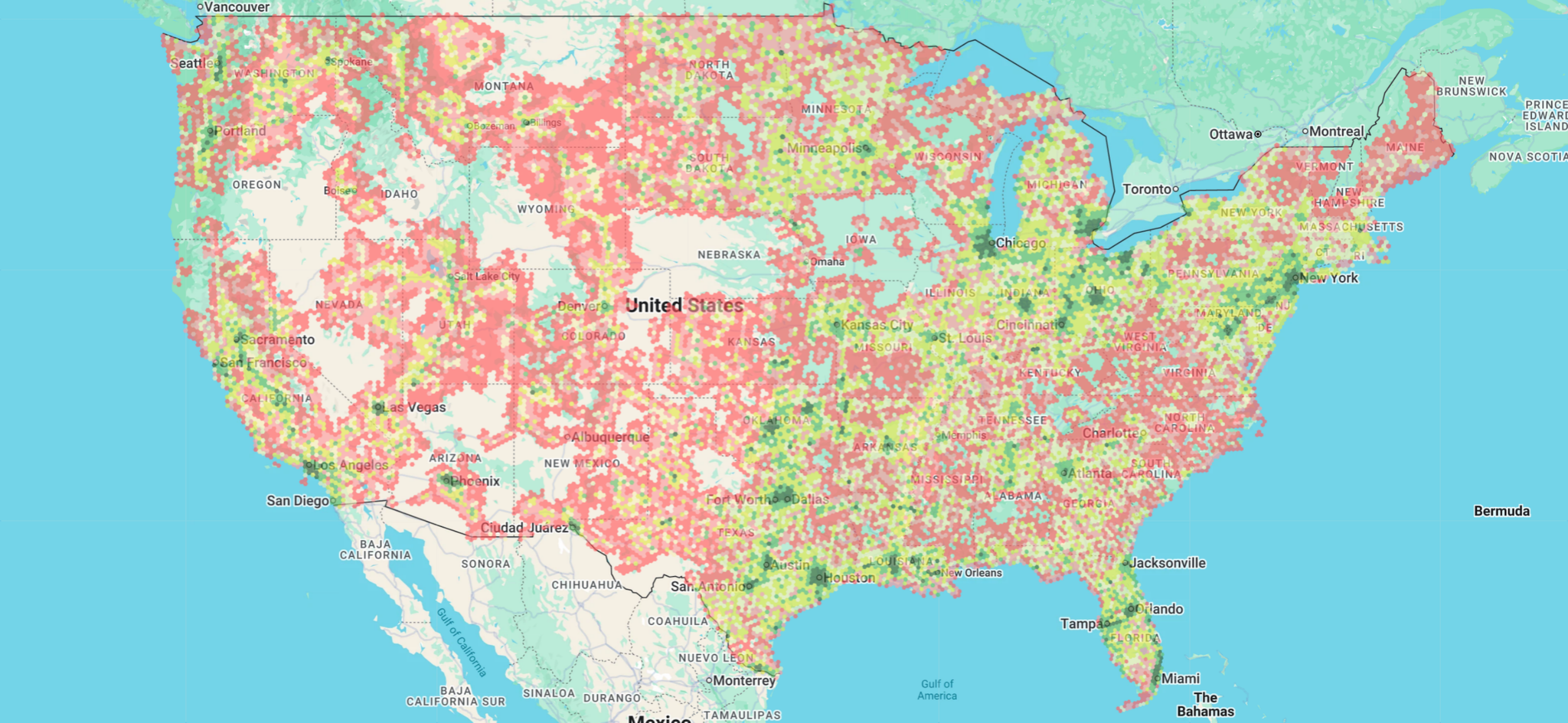
View AT&T's coverage map on Goji.
T-Mobile Coverage Map
T-Mobile leads in several 5G performance categories, but that doesn't mean you'll get a strong 5G signal everywhere.
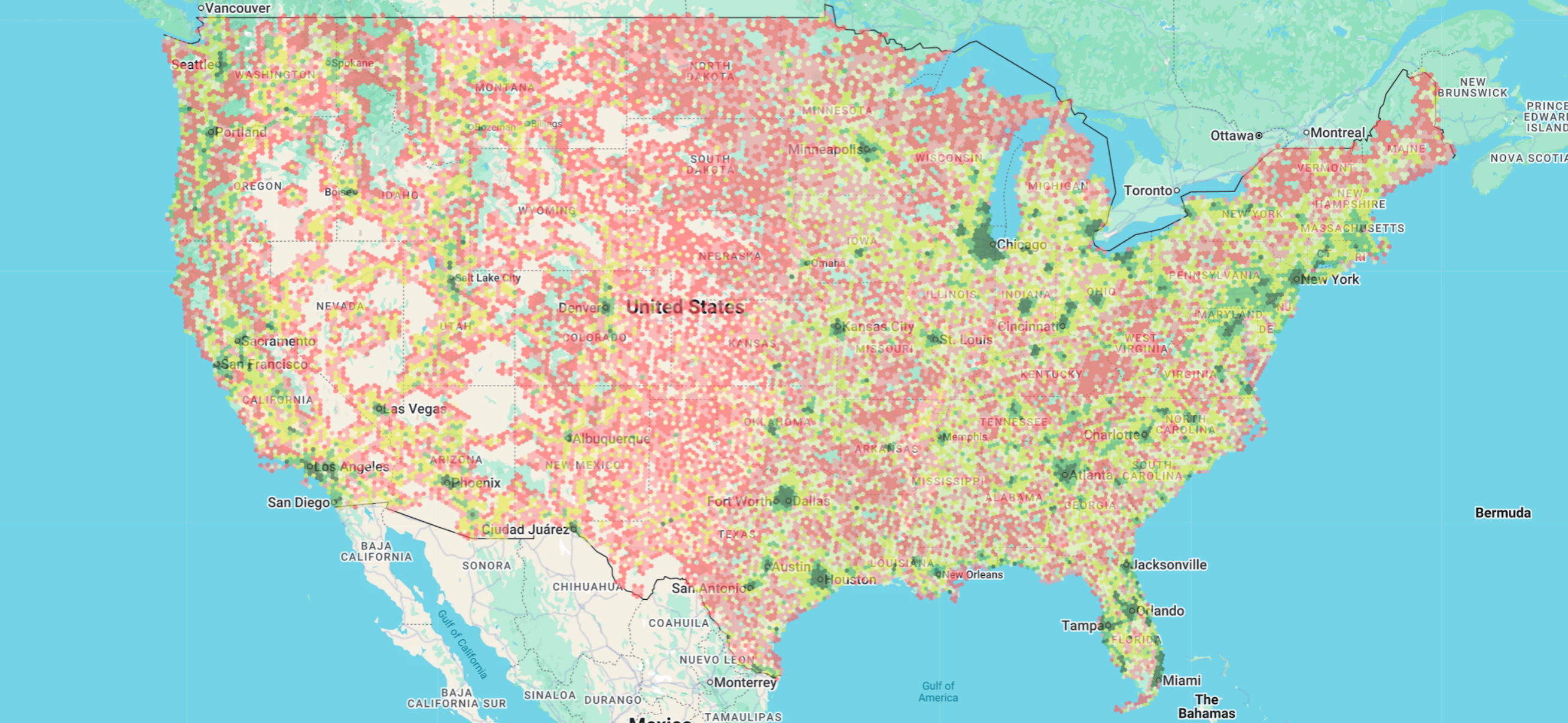
View T-Mobile's coverage map on Goji.
Verizon Coverage Map
Verizon offers broad nationwide coverage, particularly in rural areas, but even its network has dead zones.
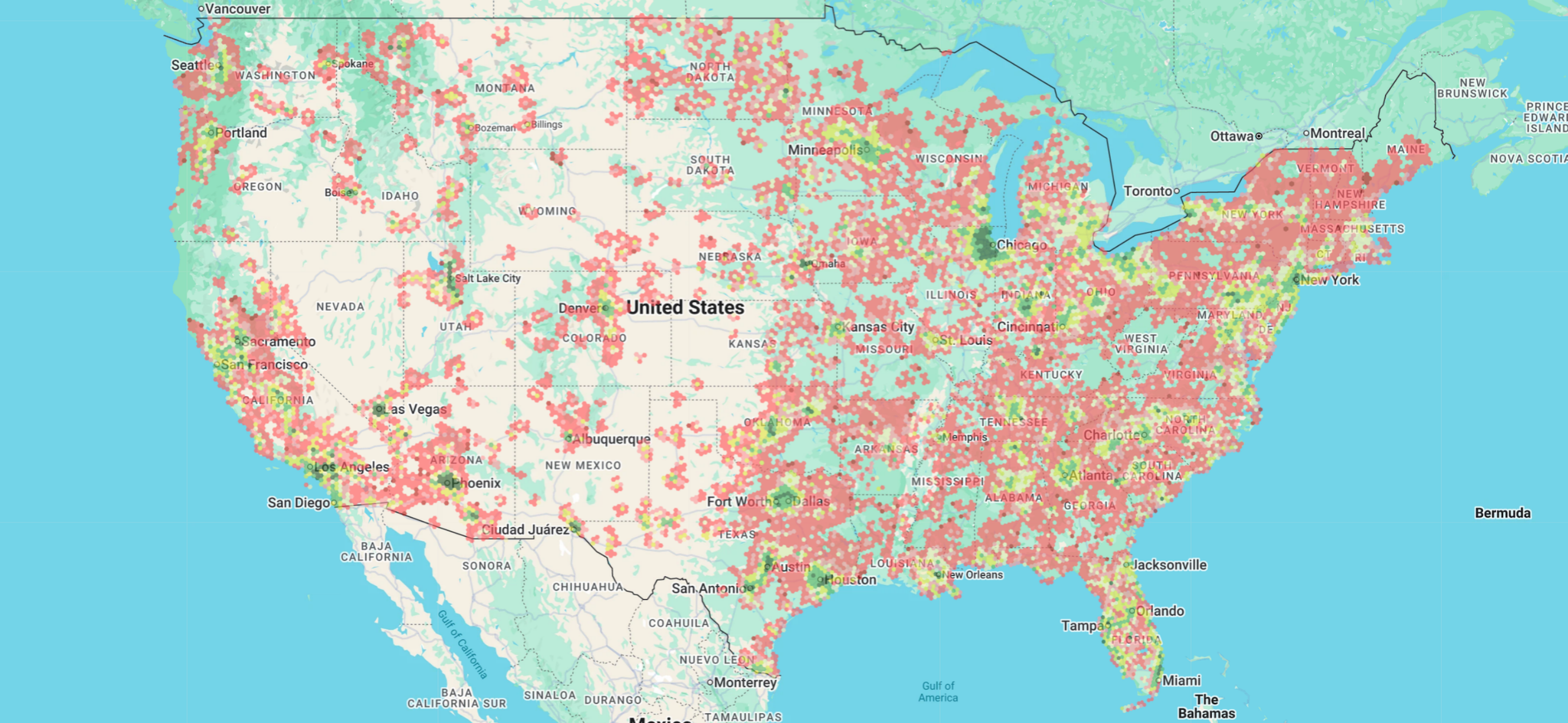
View Verizon's coverage map on Goji.
How to Find the Best Cell Phone Service in Your Area
We're not here to tell you which brand is cooler. We're here to make sure you actually get a signal when you need one. Start here:
1. Check Your Address on the Goji Coverage Map
Your house, your office, your commute, your favorite taco place. Wherever you use your phone most, that's where coverage matters.
Use the Goji Coverage Map to compare Verizon, AT&T, and T-Mobile at your address. You might be surprised which network comes out on top.
2. Ask Barry to Match You With a Plan
Not sure which carrier or plan is right for you? Meet Barry, Goji's AI plan matchmaker.
Tell Barry what matters most, whether that's better coverage, unlimited data, or a smaller monthly bill. He'll help you compare your options without the headache of researching dozens of plans yourself.
Tell Barry what you need. He'll do the comparing, you do the saving. Chat with Barry.
3. Don't Trust "#1 in the Nation" Ads
Every carrier wants to be number one. And depending on which study they're quoting, they might have a trophy to prove it.
But here's the thing: being the best nationwide doesn't guarantee the best service on your street.
Before switching, compare coverage where you actually spend your time. Your phone doesn't care who won an award if it can't load Google Maps when you need directions.
What If You Already Have Bad Cell Coverage?
If your current carrier is letting you down, there are a few ways to improve your cell phone coverage without immediately switching plans.
Been there. But don't worry, we've got your back. Start with these quick fixes:
Turn On Wi-Fi Calling
Your phone can make calls and send texts using Wi-Fi instead of relying entirely on cellular service. Just enable Wi-Fi calling in your phone's settings.
It's a lifesaver if you live in a dead zone or have spotty reception indoors.
Try a Signal Booster or Network Extender
If your signal struggles inside your home, a signal booster or network extender might help.
Signal boosters amplify an existing cellular signal, while compatible network extenders use your home internet connection to provide cellular service indoors.
They're especially worth considering if you live in a rural area, basement apartment, or house with thick walls.
Test Your Signal With Goji's Network Meter
Not sure how strong your signal actually is? Don't guess. Test it.
Goji's Network Meter helps you check your cellular connection so you can better understand the service you're getting.
Try Goji's Network Meter to see how your network performs.
Try an MVNO: Same Towers, Way Smaller Bill
Here's something your carrier probably isn't advertising: you might be able to get coverage from the same network for a whole lot less money.
That's where MVNOs come in.
These smaller carriers use major networks like Verizon, AT&T, and T-Mobile, often offering more affordable plans without requiring you to sacrifice the coverage you already know works.
Want to explore your options? Check out our guide to the best MVNO phone plans.
What Is an MVNO (and Why Is It Cheaper)?
An MVNO (mobile virtual network operator) is a smaller wireless provider that uses another carrier's network instead of building and maintaining its own cell towers.
Think of it like getting access to the same highway without paying for the fancy car.
Because MVNOs don't have to maintain nationwide tower networks, they can often offer lower monthly prices.
And here's the best part: you can generally access the same underlying network coverage as customers of the major carrier.
The catch? Some MVNO plans have lower data priority, meaning your speeds could slow down when the network gets crowded. But that doesn't automatically mean worse coverage.
The trick is finding an MVNO that uses the network with the best signal in your area.
Best Verizon MVNOs
Love Verizon's coverage but not the monthly bill? You have options.
Carriers like Visible, Total Wireless, and US Mobile offer plans using Verizon's network, often at lower prices than traditional postpaid plans.
They're worth considering if Verizon has strong coverage where you live but you're looking to save money.
Explore more MVNOs that run on Verizon's network.
Best AT&T MVNOs
If AT&T has the strongest coverage in your area, you don't necessarily need an expensive postpaid plan to use its network.
Cricket Wireless, Consumer Cellular, and US Mobile are among the providers offering access to AT&T's network.
Depending on your data needs, these carriers can offer a more affordable way to enjoy AT&T's broad nationwide coverage.
Find the best AT&T MVNO for your needs.
Best T-Mobile MVNOs
Want access to T-Mobile's fast 5G network without paying premium prices?
Carriers like Mint Mobile, Metro by T-Mobile, and Google Fi use T-Mobile's network, giving you several ways to save while staying connected.
If T-Mobile has strong 5G coverage in your area, these alternatives are worth a look.
Compare your T-Mobile MVNO options.
Same signal, smaller bill? Yes please. Compare MVNO plans on Goji.
Switch Carriers (and Keep Your Number)
If you've tried everything and your coverage still stinks, it might be time to break up with your carrier.
The good news? You can usually keep your phone number when switching to a new provider. Just make sure you don't cancel your old service before transferring your number.
Goji makes it easy to compare carriers, check coverage, and find a plan that fits your needs and budget.
Done with dropped calls? Compare plans and switch in minutes.
The Bottom Line: Which Phone Carrier Has the Best Coverage?
Verizon is our overall pick for cell phone coverage, T-Mobile leads for 5G, and AT&T stands out for keeping users connected nationwide.
But here's the thing: the best phone carrier isn't necessarily the one winning national awards. It's the one that actually works where you live, work, and travel.
That's why Goji exists. We help you compare coverage, explore plans from 100+ carriers, and find a better deal without all the guesswork.
And the best part? Better coverage doesn't have to mean a bigger phone bill.
Ready to find your best carrier? Check coverage at your address and start saving.
Best Phone Carrier Coverage FAQs
Which phone carrier has the best coverage in the U.S.?
Verizon is our overall pick for cell phone coverage, thanks to its broad nationwide network and strong performance in independent testing. However, AT&T and T-Mobile may offer better coverage in certain areas, so the best carrier ultimately depends on your location.
Who has the best cell phone service in 2026?
The best cell phone service depends on what matters most to you. Verizon stands out for overall coverage, T-Mobile leads in 5G performance, and AT&T performs well in nationwide connectivity. Your location, budget, and data needs should all factor into your decision.
Which carrier has the best 5G coverage?
T-Mobile leads in 5G coverage experience, availability, and download speeds according to Opensignal's 2026 U.S. network testing. However, 5G performance varies by location, so check coverage in your area before switching.
What is the best cell phone carrier for rural areas?
Verizon is our pick for rural cell phone coverage, with AT&T close behind. Verizon leads in overall Coverage Experience according to Opensignal's July 2026 report, although that ranking isn't specific to rural areas. Actual reception depends on your location, so checking coverage at your address is the best way to compare your options.
Is Verizon or AT&T better for coverage?
Verizon has a slight edge in overall coverage experience, while AT&T offers extensive coverage across U.S. roads and geographic areas. Both are strong options, but the better choice depends on where you live and travel. See our full AT&T vs. Verizon coverage comparison for a closer look.
Is T-Mobile's coverage actually good?
Yes! T-Mobile has strong nationwide coverage and leads in several key 5G performance categories, including availability and download speeds. However, its signal may be weaker in some rural areas, so it's worth checking your local coverage before making the switch.
How do I check which carrier has the best coverage in my area?
Use the Goji Coverage Map to compare Verizon, AT&T, and T-Mobile coverage at your address. You can explore 4G LTE and 5G coverage to see which network is the best fit for your location.
Can I switch carriers and keep my phone number?
Yes! In most cases, you can keep your existing phone number when switching carriers through a process called number porting. Just make sure your new carrier supports the transfer and don't cancel your current service until the transfer is complete.
What is an MVNO, and are MVNOs reliable?
An MVNO (mobile virtual network operator) is a smaller carrier that uses a major network like Verizon, AT&T, or T-Mobile. MVNOs generally offer access to the same underlying coverage, often at lower prices, although data speeds and priority can vary depending on the plan.