


AT&T vs. Verizon: Two of the biggest names in wireless, but which one actually gives you more for your money?
In 2026, AT&T offers a refreshed lineup of unlimited plans with more high-speed data, while Verizon continues to focus on premium network performance, customizable perks, and international features.
Both have strong nationwide coverage, but the better choice depends on where you live, how much data you use, and what you're willing to spend.
We're comparing their latest plans, prices, coverage, speeds, and extras to help you decide which carrier deserves your monthly payment.
AT&T vs. Verizon: Quick Comparison
If you just want the fast facts, here’s the simplest breakdown of how AT&T and Verizon compare on price, performance, and perks. Consider this your one-scroll cheat sheet before we dig into the fuller details below.
Plans & Pricing Comparison
AT&T and Verizon both offer unlimited plans, but their pricing and features are a little different.
AT&T's updated Unlimited Your Way lineup includes Value 2.0, Extra 2.0, Premium 2.0, and Elite 2.0. Verizon keeps things simpler with three main options: Unlimited Welcome, Unlimited Plus, and Unlimited Ultimate.
AT&T generally offers lower starting prices, while Verizon's higher-tier plans stand out for premium data, hotspot usage, and customizable perks.
Here's how they compare.
AT&T vs. Verizon Unlimited Plans
Both carriers offer unlimited talk, text, and data, but not every unlimited plan delivers the same experience.
Some plans include a set amount of premium data before speeds may slow during congestion. Others offer unlimited premium data, larger hotspot allowances, or additional international features.
Here's how their main unlimited plans compare in 2026.
Our take: AT&T offers better value at several price points. Extra 2.0 costs $70/month and includes 100GB of premium data and 50GB of hotspot data, compared with Verizon Unlimited Plus at $80/month with unlimited premium smartphone data and 30GB of hotspot data.
AT&T Premium 2.0 is another standout at $72/month, offering unlimited high-speed smartphone data and 100GB of hotspot data. That's $8 less than Verizon Unlimited Plus, with a significantly larger hotspot allowance.
For heavy hotspot users, AT&T Elite 2.0 offers 250GB of high-speed hotspot data for $110/month. Verizon Unlimited Ultimate costs $95/month and includes unlimited hotspot data, with 200GB at premium speeds.
The bottom line: AT&T Premium 2.0 looks like the strongest value based on these prices, while Verizon Unlimited Ultimate is worth considering if you need unlimited hotspot access beyond the premium-speed allowance.
Browse unlimited AT&T plans | Browse unlimited Verizon plans
AT&T vs. Verizon Family Plans
For families (or friend groups sharing a bill), both AT&T and Verizon offer savings when you add multiple lines. But how much you save depends on the carrier, plan, and number of people on your account.
Here's how their unlimited plans compare for one to four lines.
Prices are per line, per month, with eligible AutoPay and paperless billing discounts, before taxes and fees. AT&T's full $10 AutoPay discount requires an eligible bank account or AT&T Points Plus Card; debit card payments qualify for $5 off. Limited-time promotions may lower prices further.
Our take: Both carriers offer significant savings on multi-line plans, but AT&T generally offers better value on its mid-tier and premium options, while Verizon's Unlimited Welcome is slightly cheaper for four lines.
One thing worth considering is that both carriers let you mix and match unlimited plans. If one family member needs unlimited premium data while another mostly uses Wi-Fi, you don't necessarily need to pay for the same plan on every line.
The bottom line: Compare the total monthly cost for your household, not just the advertised price per line. The right combination of plans could save you more than choosing the cheapest plan for everyone.
Browse AT&T family plans | Browse Verizon family plans
AT&T vs. Verizon Prepaid Plans
Don't want to commit to a traditional postpaid plan? Both AT&T and Verizon offer prepaid options that let you pay for service upfront without a long-term wireless service contract.
Prepaid plans can be a great way to lower your monthly bill, but the savings depend on how much data you need and whether you're willing to pay for several months in advance.
Here's how AT&T and Verizon's prepaid plans compare.
Prices reflect advertised offers as of October 2026. AT&T's $20/month annual plan requires a $240 upfront payment, and its Unlimited Ultra $45/month promotional rate lasts six months before increasing to $60/month. Verizon prices include eligible AutoPay discounts. Taxes, fees, and restrictions may apply.
Our take: AT&T is the better choice for budget-conscious prepaid customers, especially if you're comfortable with slower data speeds or paying upfront.
Its $20/month annual plan offers unlimited data and 10GB of hotspot access, although speeds slow after 16GB. The $25/month Unlimited plan is another affordable option, but its speed limits make it better suited for everyday browsing than heavy streaming or downloading.
Verizon's prepaid plans start at $30/month with AutoPay for Talk & Text, while its unlimited options start at $50/month with AutoPay.
The bottom line: AT&T offers more affordable prepaid unlimited options, while Verizon may appeal to customers who prefer its network and want to take advantage of AutoPay and loyalty discounts.
Before choosing either carrier, it's worth comparing smaller prepaid providers that use the same major networks. You may find similar coverage for even less.
Browse AT&T prepaid plans | Browse Verizon prepaid plans
AT&T vs. Verizon Travel Plans
Planning a trip abroad? Both AT&T and Verizon offer international coverage, but what you get depends on your plan and destination.
Some plans include service in Mexico and Canada, while higher-tier options offer coverage in hundreds of countries. The key is understanding what's included before you leave so you don't come home to an unexpected phone bill.
Here's how the two carriers compare for international travel.
AT&T Travel Options
AT&T includes Mexico and Canada benefits on eligible unlimited plans, with additional international features available on its premium tiers.
- Best for occasional international travel: AT&T Premium 2.0 ($72/mo). Includes unlimited high-speed smartphone data, 100GB of hotspot data, and roaming benefits in select Latin American countries.
- Best for frequent international travel: AT&T Elite 2.0 ($110/mo). Offers coverage in 205 countries and destinations, along with unlimited high-speed smartphone data and 250GB of high-speed hotspot data.
- For other AT&T plans: International Day Pass may be an option for using your domestic plan while traveling in eligible destinations, with additional daily charges.
Verizon Travel Options
Verizon includes Mexico and Canada benefits on eligible plans and offers additional international features through its higher-tier plans and travel add-ons.
- Best for frequent international travel: Verizon Unlimited Ultimate ($95/mo). Includes coverage in 205 countries and destinations, unlimited premium smartphone data, and unlimited hotspot data with 200GB at premium speeds.
- For occasional international travel: Verizon TravelPass lets eligible customers use their domestic plan in supported destinations for an additional daily charge.
- For longer trips: Verizon also offers international plan options that may be worth considering depending on your destination and length of stay.
Keep in mind that these hotspot allowances are standard plan features and may not apply when traveling internationally. Always check the roaming limits for your destination.
Our take: Verizon Unlimited Ultimate is our pick for frequent international travelers. At $95/month, it offers coverage in 205 countries and destinations for $15 less than AT&T Elite 2.0.
However, AT&T Elite 2.0 may be worth the extra cost if you also need its larger 250GB high-speed hotspot allowance.
For occasional travelers, neither premium plan is necessarily worth upgrading to just for one trip. You may save more by keeping your current phone plan and purchasing a travel eSIM or adding international service only when you need it.
The bottom line: Before traveling, check your destination's coverage, high-speed data limits, and any additional roaming charges. International coverage doesn't always mean unlimited full-speed data abroad.
Browse AT&T plans | Browse Verizon plans
AT&T vs. Verizon Coverage Comparison
When it comes to choosing a phone carrier, coverage matters just as much as price. After all, even the best unlimited plan isn't worth much if you can't get a reliable signal.
Both AT&T and Verizon offer extensive nationwide 4G LTE and 5G coverage, but they have different strengths.
In our guide to which carrier has the best coverage, we found that Verizon stands out for rural coverage and overall reliability, while AT&T performs particularly well in network consistency.
Let's take a closer look at how their coverage compares.
AT&T Coverage
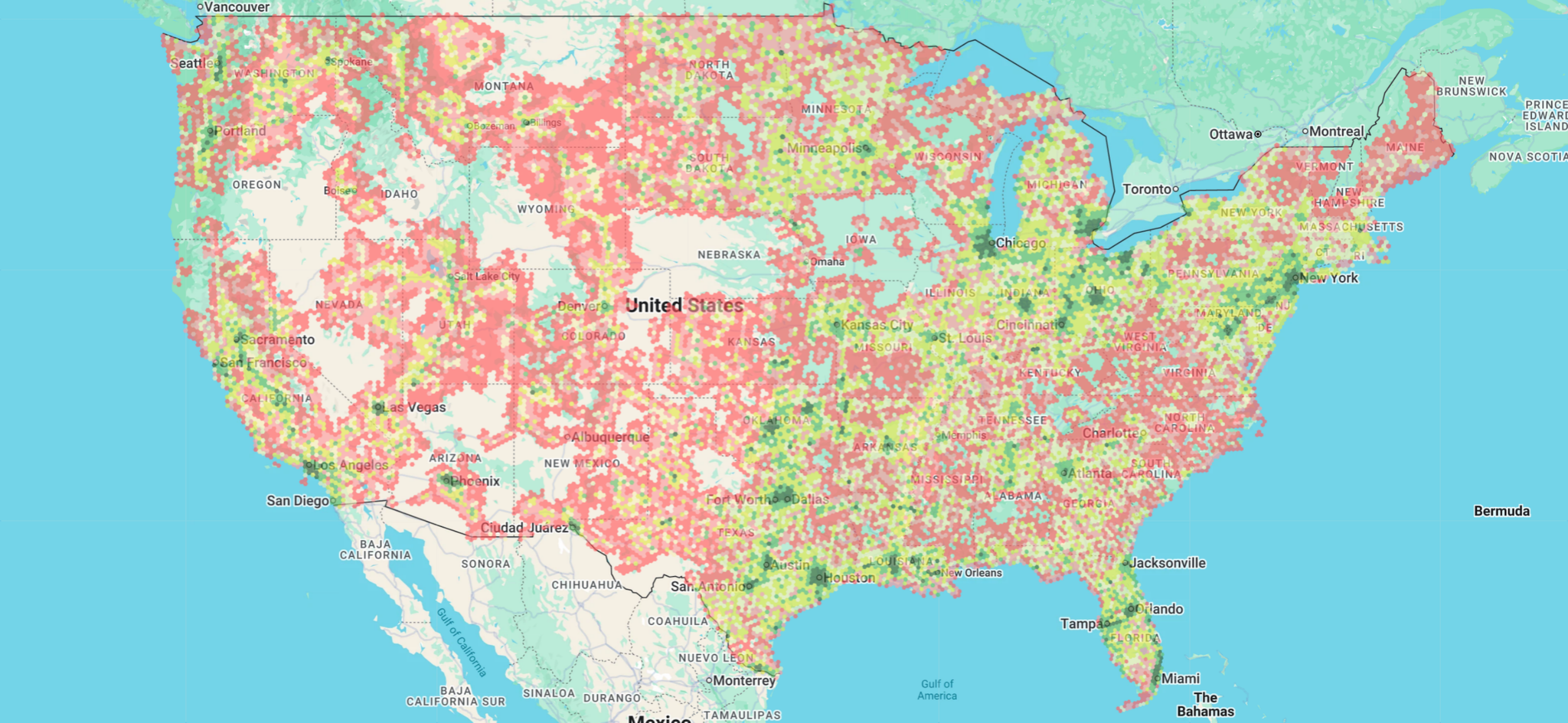
AT&T offers extensive nationwide 4G LTE coverage, along with a growing 5G network. Its 5G+ service delivers faster speeds in supported areas, particularly in cities and other high-traffic locations.
One of AT&T's biggest strengths is consistency. In our broader carrier coverage comparison, AT&T stood out for delivering a dependable network experience across everyday activities like browsing, streaming, and making calls.
That makes AT&T a strong option for customers who prioritize steady performance throughout the day, especially in areas where its network is well established.
AT&T 5G Coverage Map
Verizon Coverage
Verizon has long been known for its extensive nationwide coverage, particularly in rural areas where reliable service can be harder to find.
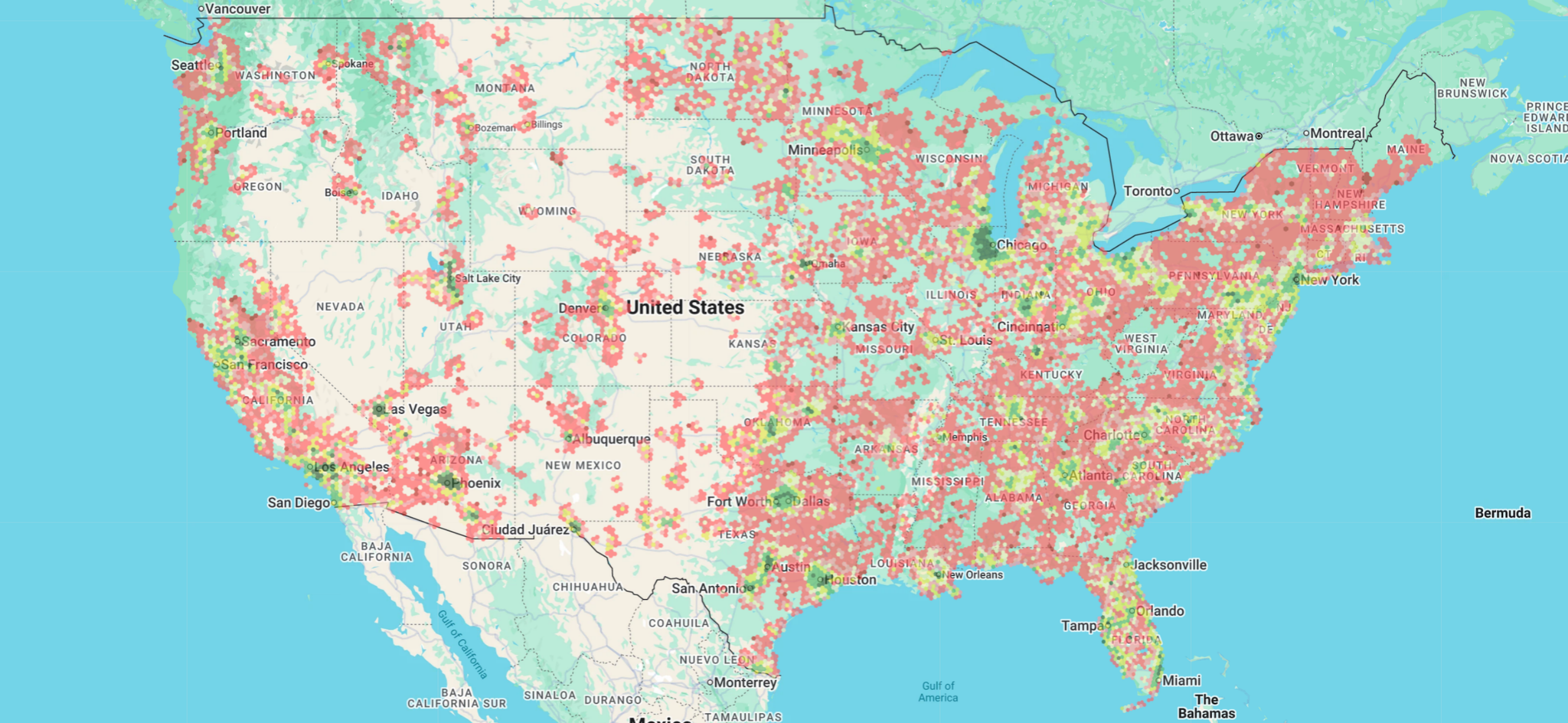
Its network includes widespread 4G LTE service, standard 5G, and faster 5G Ultra Wideband coverage in supported locations.
In our broader carrier coverage comparison, Verizon stood out for both rural coverage and overall reliability. That's particularly valuable for customers who travel frequently, live outside major cities, or need dependable service across different locations.
Verizon 5G Coverage Map
Which Has Better Coverage: AT&T or Verizon?
Verizon has the edge for rural coverage and overall reliability, while AT&T stands out for network consistency.
Here's how we'd break it down:
- Best for rural coverage: Verizon. Its extensive network makes it a strong choice for people living or traveling outside major cities.
- Best for reliability: Verizon. Verizon performed particularly well in our broader network comparison.
- Best for consistency: AT&T. AT&T stands out for maintaining a dependable experience across everyday mobile activities.
- Best for your specific address: It depends. Local tower placement, building materials, and network congestion can all affect coverage.
Our Take
Verizon is our overall pick for coverage between these two carriers, especially if rural service and reliability are your top priorities.
But AT&T is still a strong competitor, and its consistent network performance may make it the better choice in your area.
Before switching, check both networks at the places you actually use your phone. A carrier can perform exceptionally well nationwide and still have weak coverage inside your home.
Want to see how these networks compare with T-Mobile, too? Read our full guide to which carrier has the best coverage.
You can also use Goji's free Coverage Map to compare network availability at your address.
Network Speeds & Performance
Having 5G coverage doesn't always mean you'll get lightning-fast speeds. Your actual experience depends on your location, network congestion, phone, and even which plan you're paying for.
So, how do AT&T and Verizon compare when it comes to speed and reliability?
5G Network Performance
Both carriers offer faster versions of 5G, but they use different names:
- AT&T 5G+: AT&T's faster 5G network, available in supported areas.
- Verizon 5G Ultra Wideband: Verizon's high-performance 5G network, designed to deliver faster speeds and greater capacity in supported locations.
Both networks can deliver fast download speeds for streaming, gaming, video calls, and everyday browsing. However, neither carrier is consistently faster in every location.
Your actual speeds depend on factors like network congestion, distance from nearby towers, device compatibility, and whether you're connected to standard 5G or a faster 5G network.
The takeaway: Both AT&T and Verizon offer strong 5G performance, but the faster option ultimately depends on where you use your phone.
Consistency & Reliability
Speed is only part of the equation. A fast connection isn't very useful if it keeps dropping when you're trying to make a video call or load directions.
According to Opensignal's July 2026 report, AT&T customers spent 99.6% of their time connected to the network, compared with 99.5% for Verizon.
That's an incredibly close result, showing that both carriers deliver dependable connectivity.
Independent testing also shows how competitive the two networks have become. RootMetrics awarded AT&T and Verizon a tie for overall network performance in the first half of 2026.
The takeaway: AT&T has a slight advantage in time connected, but both carriers are strong performers when it comes to reliability.
Real-World Performance
What do these differences actually mean when you're using your phone?
- Streaming and scrolling: Both carriers are more than capable of handling everyday streaming, browsing, and social media in areas with good coverage.
- Video calls: A stable connection matters more than hitting the highest possible download speed.
- Gaming: Latency and network consistency can be just as important as download speeds.
- Hotspot usage: Your plan matters here, too. Higher-tier AT&T and Verizon plans include larger high-speed hotspot allowances, which can make a difference when working or streaming from another device.
- Busy areas: Even with full bars and 5G, congestion can slow your connection during peak hours.
And if you've ever noticed your phone performing worse on 5G than LTE, you're not imagining things. There are several reasons that can happen, which we explain in our guide to why 5G can be slower than LTE.
Our Take
Both AT&T and Verizon deliver strong everyday performance, with different advantages depending on your location.
AT&T stands out for network consistency, while Verizon remains a strong choice for reliability. But for most people, the difference between these two carriers comes down to local performance rather than nationwide speed rankings.
Before choosing, consider how each network performs where you live, work, and spend the most time. A carrier might rank highly nationwide but still struggle in your neighborhood.
Perks & Extras
Phone plans aren't just about talk, text, and data anymore. Both AT&T and Verizon offer additional benefits, from mobile security to entertainment subscriptions and international travel features.
But here's the catch: Some perks are included with your plan, while others cost extra. So which carrier gives you more for your money?
AT&T Perks
AT&T focuses more on practical benefits than entertainment subscriptions, with features that vary depending on your plan.
- AT&T ActiveArmor: Provides spam call blocking and security features, with additional protections available on eligible plans.
- Flexible Family Plans: AT&T's Unlimited Your Way lets you mix and match unlimited plans on the same account, so everyone can choose the features they need.
- Generous Hotspot Data: Premium 2.0 includes 100GB of high-speed hotspot data, while Elite 2.0 offers 250GB.
- International Benefits: Eligible plans include Mexico and Canada coverage, with additional Latin America roaming benefits on Premium 2.0 and coverage in 205 countries and destinations on Elite 2.0.
- Phone Upgrade Options: AT&T Next Up Anytime gives eligible customers the option to upgrade their phones early for an additional monthly fee.
Verizon Perks
Verizon takes a more customizable approach, allowing customers to add entertainment, lifestyle, and travel benefits to eligible unlimited plans.
- Entertainment Subscriptions: Verizon offers optional perks for services like Disney+, Hulu, ESPN, Netflix, and other streaming platforms.
- Customizable Perks: With Verizon's myPlan, customers can add or remove eligible perks depending on their needs. Many cost an additional monthly fee.
- Unlimited Premium Data: Unlimited Plus and Unlimited Ultimate include unlimited premium smartphone data.
- Mobile Hotspot: Unlimited Ultimate includes unlimited hotspot data, with 200GB at premium speeds.
- International Travel: Unlimited Ultimate includes coverage in 205 countries and destinations.
- Security Features: Verizon offers spam protection, account security tools, and optional family safety features.
Our Take
Verizon wins for customizable perks, while AT&T stands out for practical, included benefits.
If you already pay for multiple streaming services, Verizon's optional entertainment perks could help you save. Just remember that many of these benefits aren't free, so you'll want to factor their cost into your monthly bill.
AT&T takes a simpler approach, focusing on features like mobile security, flexible family plans, and generous hotspot allowances.
The bottom line: Verizon is a better fit if you want to customize your plan with entertainment and lifestyle perks. AT&T may be the better choice if you'd rather prioritize data, hotspot access, and everyday functionality over subscription bundles.
Customer Support & Satisfaction
Even with great coverage and affordable plans, customer service can make or break your experience with a carrier. Whether you're dealing with a billing issue, a dropped connection, or a phone upgrade, you want to know you can get help when you need it.
Both AT&T and Verizon offer multiple ways to get support, but the experience can vary depending on your issue and how you prefer to get help.
AT&T Customer Support
AT&T offers several ways to manage your account and get assistance:
- In-store support: Visit an AT&T retail location for help with devices, upgrades, and account questions.
- Online and app support: Manage your plan, pay bills, and troubleshoot common issues through AT&T's website and mobile app.
- Phone and chat support: Contact customer service for billing questions, technical problems, and account assistance.
Verizon Customer Support
Verizon provides similar support options, including:
- In-store support: Visit a Verizon retail location for device assistance, upgrades, and account questions.
- Online and app support: Use the My Verizon app or website to manage your account, make payments, and troubleshoot issues.
- Phone and chat support: Get assistance with billing, network problems, and account management.
Our Take
It's a tie when it comes to customer support options. Both carriers offer in-store assistance, phone support, online chat, and self-service tools.
However, having multiple support channels doesn't necessarily guarantee a great experience. Customer satisfaction can vary depending on the representative, the complexity of your issue, and how quickly it's resolved.
If in-person assistance matters to you, consider which carrier has a convenient retail location nearby. Otherwise, both AT&T and Verizon offer plenty of ways to manage your account and get help when you need it.
Device Compatibility & Upgrades
Thinking about switching carriers or upgrading your phone? Both AT&T and Verizon support popular devices from Apple, Samsung, Google, and other major manufacturers.
But while both carriers offer financing, trade-in deals, and upgrade options, the fine print can make a big difference in what you actually pay.
Here's how they compare.
AT&T Device Compatibility & Upgrades
AT&T offers several ways to bring your current phone, finance a new one, or upgrade before your device is fully paid off.
- Bring Your Own Phone (BYOD): You can bring an eligible unlocked phone to AT&T, as long as it's compatible with the network.
- Device Financing: AT&T offers monthly installment plans on eligible smartphones, allowing you to spread the cost of a new device over time.
- Next Up Anytime: For an additional $10/month on eligible installment agreements, AT&T's early-upgrade program lets qualifying customers upgrade before their current phone is fully paid off, subject to program requirements.
- Trade-In Deals: AT&T regularly offers promotional credits toward new smartphones when you trade in an eligible device and meet the offer's plan and financing requirements.
Verizon Device Compatibility & Upgrades
Verizon offers similar options for customers who want to keep their current phone or upgrade to something new.
- Bring Your Own Phone (BYOD): You can activate an eligible unlocked smartphone on Verizon's network, provided it meets the carrier's compatibility requirements.
- Device Financing: Verizon offers monthly device payment agreements on eligible phones, typically spread over 36 months.
- Early Upgrades: Eligible customers may be able to upgrade before paying off their current phone, depending on the device, payment agreement, and upgrade requirements.
- Trade-In Deals: Verizon frequently offers promotional credits toward new phones, with the biggest discounts often requiring an eligible trade-in, qualifying unlimited plan, or new line.
Our Take
Both carriers offer competitive upgrade options, but AT&T stands out for its dedicated early-upgrade program.
AT&T Next Up Anytime may appeal to customers who like getting a new phone frequently, while Verizon offers flexible financing and trade-in promotions of its own.
However, don't let a heavily discounted phone distract you from the cost of your wireless plan. Many carrier promotions distribute savings through monthly bill credits over 36 months, meaning you may lose remaining credits if you leave early or no longer meet the offer requirements.
The bottom line: Before committing to a new phone deal, compare the total cost of the device and plan together. Sometimes buying an unlocked phone and choosing a cheaper wireless plan can save you more in the long run.
AT&T vs. Verizon: Pros & Cons
Both AT&T and Verizon have their strengths, but neither is the perfect fit for everyone. Here's a quick look at where each carrier shines and where it falls short.
AT&T Pros & Cons
Pros
- Lower starting prices: Unlimited plans start at $50/month for one line, compared with Verizon's $65/month starting price.
- Generous hotspot allowances: Premium 2.0 includes 100GB of high-speed hotspot data, while Elite 2.0 offers 250GB.
- Consistent network performance: AT&T stands out for network consistency across everyday mobile activities.
- Flexible family plans: Mix and match unlimited plan tiers based on each family member's needs.
- International coverage: Elite 2.0 offers coverage in 205 countries and destinations.
Cons
- Data limits on lower-tier plans: Value 2.0 and Extra 2.0 have set premium data allowances before speeds may slow during congestion.
- Expensive top-tier plan: Elite 2.0 costs $110/month for a single line.
- Fewer entertainment perks: AT&T doesn't offer the same range of customizable streaming subscriptions as Verizon.
- Location-dependent coverage: AT&T may not perform as well as Verizon in some rural areas.
Verizon Pros & Cons
Pros
- Strong rural coverage: Verizon is a strong choice for customers living or traveling outside major cities.
- Reliable network: Verizon stands out for overall network reliability.
- Unlimited premium data: Unlimited Plus and Ultimate include unlimited premium smartphone data.
- Customizable perks: Add eligible streaming, entertainment, and lifestyle subscriptions to your plan.
- International benefits: Unlimited Ultimate includes coverage in 205 countries and destinations.
- Unlimited hotspot on Ultimate: Includes 200GB of premium hotspot data, followed by unlimited lower-speed data.
Cons
- Higher starting prices: Unlimited Welcome starts at $65/month for one line.
- Perks cost extra: Many entertainment and subscription benefits require an additional monthly fee.
- Limited entry-level features: Unlimited Welcome doesn't include mobile hotspot data.
- Premium plans get expensive: Unlimited Ultimate costs $95/month for a single line.
- Coverage still varies: Verizon's nationwide reputation doesn't guarantee the best signal at every address.
AT&T vs. Verizon: Which Should You Choose?
So, which carrier actually comes out on top?
Both AT&T and Verizon offer strong nationwide coverage, competitive unlimited plans, and plenty of options for families and frequent travelers. But the best choice depends on what matters most to you.
Here's how to decide.
Choose AT&T If…
- You want a lower starting price. AT&T's unlimited plans start at $50/month for one line, compared with Verizon's $65/month.
- You use a lot of hotspot data. Premium 2.0 includes 100GB of high-speed hotspot data, while Elite 2.0 offers 250GB.
- You want flexible family plans. AT&T lets you mix and match unlimited plan tiers so each person gets the features they need.
- You prioritize network consistency. AT&T performs well in maintaining a dependable connection for everyday mobile activities.
- You want premium features without the highest price tag. AT&T Premium 2.0 offers unlimited high-speed smartphone data and 100GB of hotspot data at a lower price than Verizon's top-tier plan.
Choose Verizon If…
- You live in a rural area. Verizon's extensive network makes it a strong option for customers outside major cities.
- You prioritize reliability. Verizon has a strong track record in nationwide network testing.
- You want customizable perks. Verizon offers optional streaming, entertainment, and lifestyle subscriptions.
- You travel internationally. Unlimited Ultimate includes coverage in 205 countries and destinations.
- You need unlimited hotspot access. Unlimited Ultimate includes 200GB of premium hotspot data, followed by unlimited lower-speed data.
Our Final Verdict
AT&T is our pick for overall value, while Verizon stands out for rural coverage, reliability, and customizable perks.
AT&T's lower starting prices, flexible family plans, and generous hotspot allowances make it a strong choice for customers who want premium features without overspending.
Verizon is particularly appealing for customers who prioritize dependable coverage, international travel, and entertainment perks.
But here's something worth remembering: You don't necessarily need to pay AT&T or Verizon prices to use their networks.
Smaller carriers like Cricket Wireless, Visible, and US Mobile offer plans that use major wireless networks, often for significantly less per month.
If both AT&T and Verizon offer reliable coverage where you live, comparing those alternatives could be the easiest way to lower your phone bill without sacrificing the network you prefer.
Find the Best Phone Plan for Your Budget
Still deciding between AT&T and Verizon? You might have more options than you think.
Smaller carriers use the same major wireless networks, often at a fraction of the price. That means you could get the coverage you need without paying for features you'll never use.
With Goji, you can compare plans from all the top carriers, check coverage at your address, and find an option that fits your budget.
Frequently Asked Questions
Is AT&T better than Verizon?
AT&T is a strong choice for customers who want lower starting prices, generous hotspot allowances, and flexible family plans. Verizon stands out for rural coverage, reliability, and customizable perks. The better carrier depends on your location, budget, and data needs.
Is AT&T cheaper than Verizon?
Generally, yes. AT&T's unlimited plans start at $50/month for one line, compared with $65/month for Verizon Unlimited Welcome. However, multi-line discounts, AutoPay eligibility, and promotional offers can change which carrier is cheaper for your household.
Does AT&T or Verizon have better coverage?
Verizon has an advantage in rural coverage and overall reliability, while AT&T stands out for network consistency. However, coverage varies by location, so checking both networks at your address is the best way to determine which one will work better for you.
Is Verizon faster than AT&T?
Both carriers offer fast 5G service, but neither is guaranteed to be faster everywhere. Actual speeds depend on your location, network congestion, device compatibility, and whether you're connected to standard 5G or a faster network like Verizon 5G Ultra Wideband or AT&T 5G+.
Can I switch from AT&T to Verizon and keep my phone number?
Yes! In most cases, you can transfer your existing phone number when switching from AT&T to Verizon or vice versa. Make sure your phone is unlocked and compatible with the new network, and don't cancel your current service before the number transfer is complete.
Are there cheaper alternatives to AT&T and Verizon?
Absolutely. Smaller carriers like Cricket Wireless, Visible, and US Mobile offer plans that run on the same major wireless networks, often at lower monthly prices. Comparing these options can help you save money while keeping access to the coverage you need.